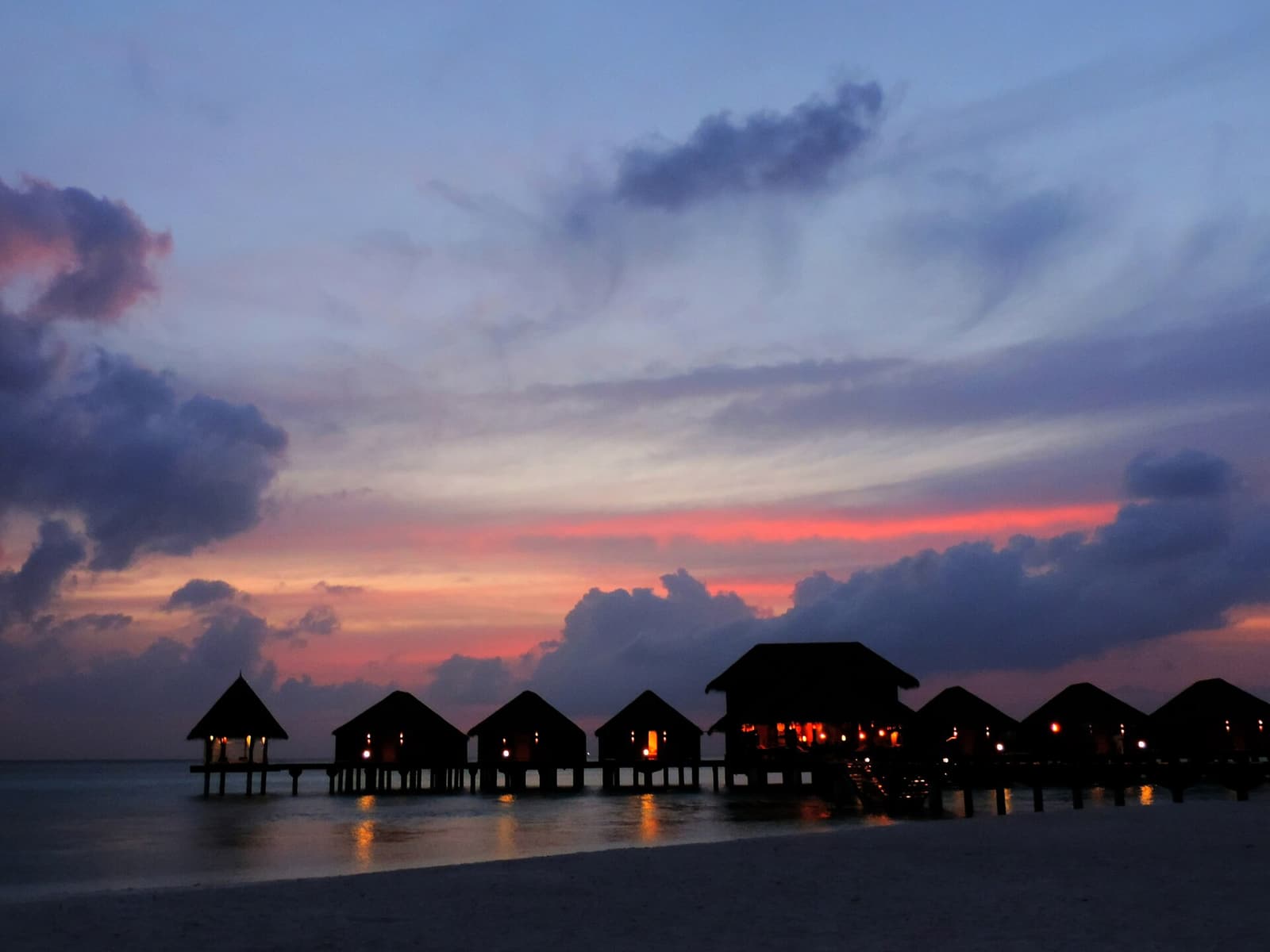
Dhangethi is not a resort and does not try to be one. It is a small, tidy island of fishermen, boat builders and resort workers, with a handful of guesthouses, a few cafés and a bikini beach. What makes it special is its position: on the southern rim of Ari Atoll, beside one of the best places on Earth to snorkel with whale sharks.
The island in brief
- Where: Alif Dhaal (South Ari) Atoll, about 88 km south-west of Malé.
- People: around 1,200 residents; fishing, boat building, carpentry, handicrafts and resort work are the main livelihoods.
- Size: walkable in under an hour; no cars to speak of.
- Religion and rules: a Muslim community; alcohol-free; modest dress in the village.
- Language: Dhivehi; English is widely spoken in guesthouses and dive centres.
- Currency: Maldivian rufiyaa (MVR); US dollars widely accepted for tourist services.
What to do
The headline is the whale shark snorkel in the South Ari Marine Protected Area. Around it, plan manta, turtle and reef snorkelling, a dive or two, a sandbank or picnic island, a traditional sunset fishing trip, a resort day, and simply living at island pace — a morning walk to the harbour, an afternoon on the bikini beach, sunset on the waterfront.
 Dhangethi island
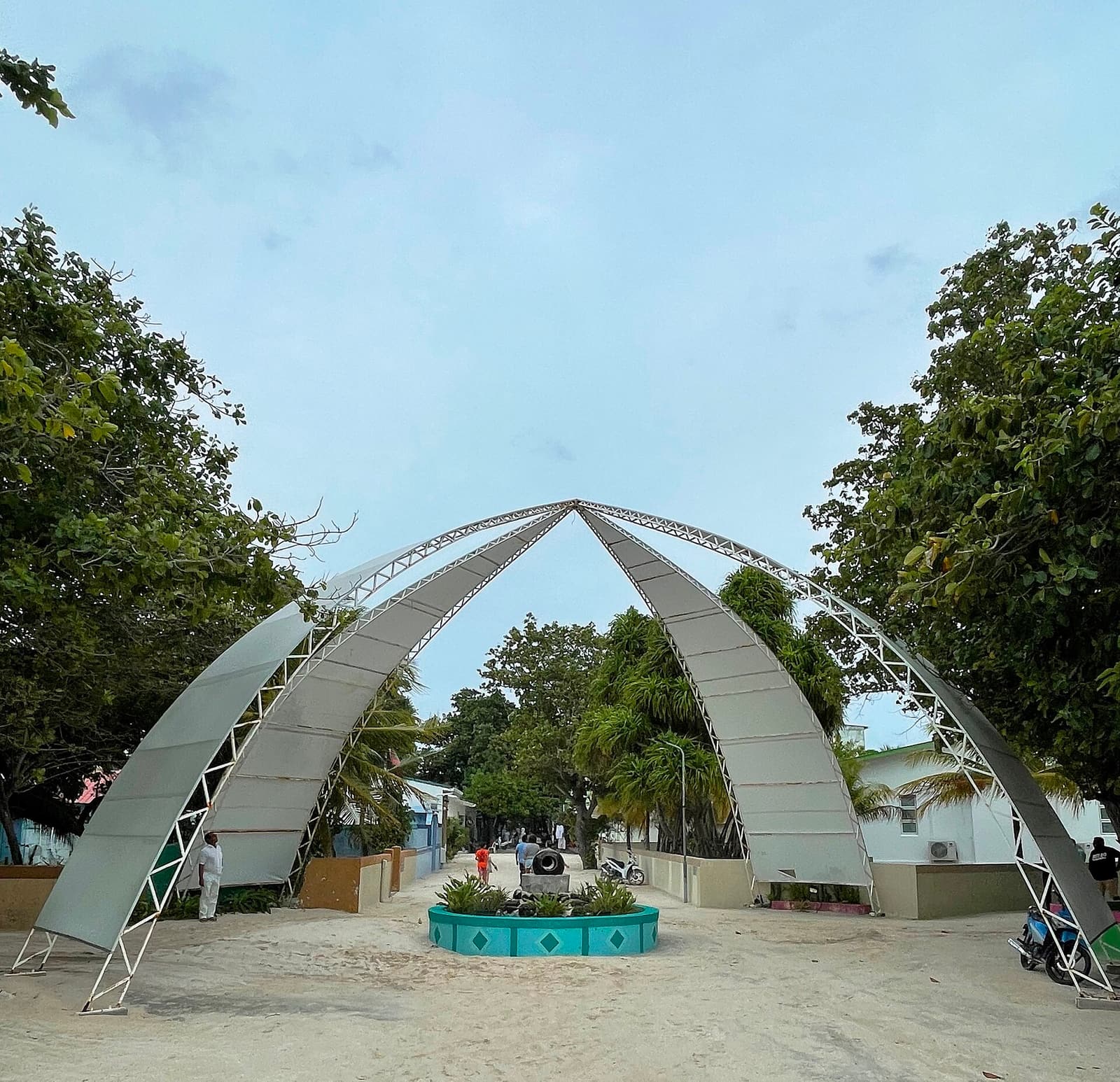
Dhangethi Village & Harbour
Sandy lanes, a boatyard and island life at its own pace
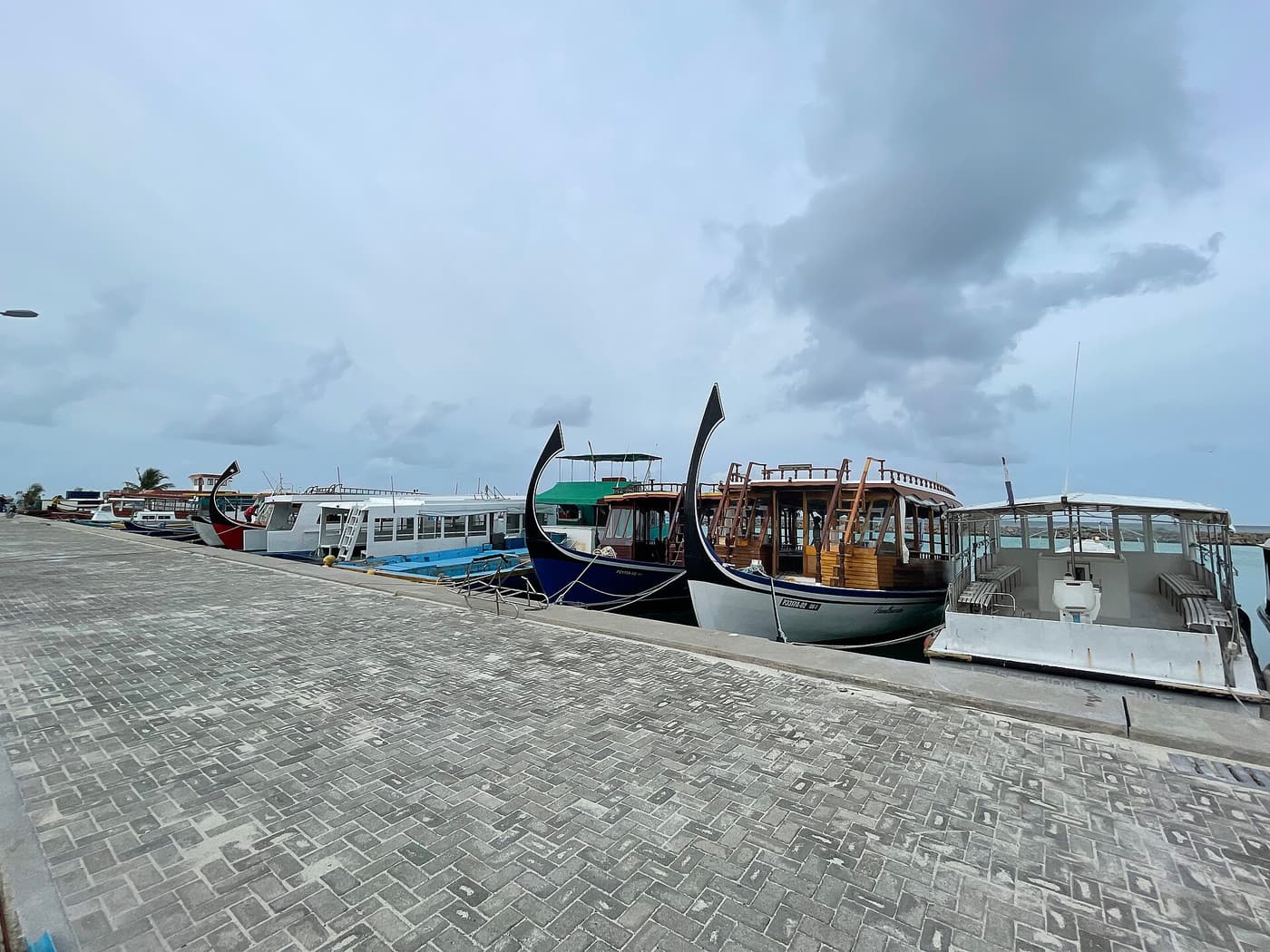
Dhangethi is a working Maldivian island of roughly 1,200 people, home to fishermen, boat builders and resort workers. Its sandy streets, little cafés, mosque, school and busy harbour are the real Maldives that resort guests rarely see — friendly, quiet and easy to explore on foot in an hour.
 Dhangethi island
Dhangethi Bikini Beach
The beach where swimwear is fine
Like other inhabited islands in the Maldives, Dhangethi sets aside a tourist beach where bikinis and ordinary swimwear are accepted. It is the place for sunbathing and swimming in the lagoon; elsewhere on the island, cover shoulders and knees. Your guesthouse will point you to it.
 Reefs & marine life
South Ari Marine Protected Area
One of the few places on Earth with whale sharks all year
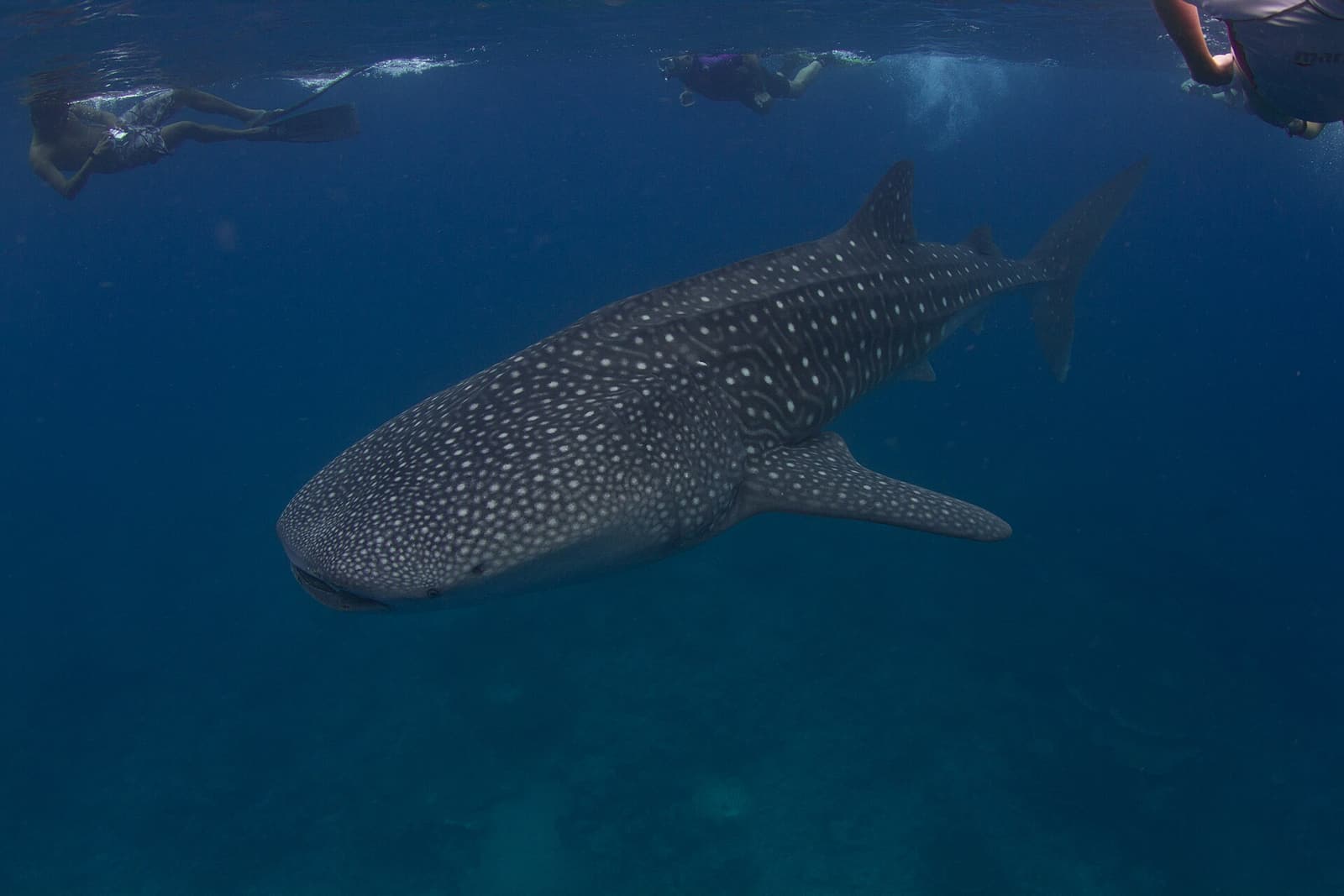
The outer reef running along the southern rim of Ari Atoll — past Dhigurah, Dhangethi and Maamigili — is a protected area best known for juvenile whale sharks, which are seen here in every month of the year. Boats from Dhangethi reach it in minutes, and a whale shark snorkel is the reason most visitors come.
 Reefs & marine life
Manta Points of South Ari
Cleaning stations where mantas come to be groomed
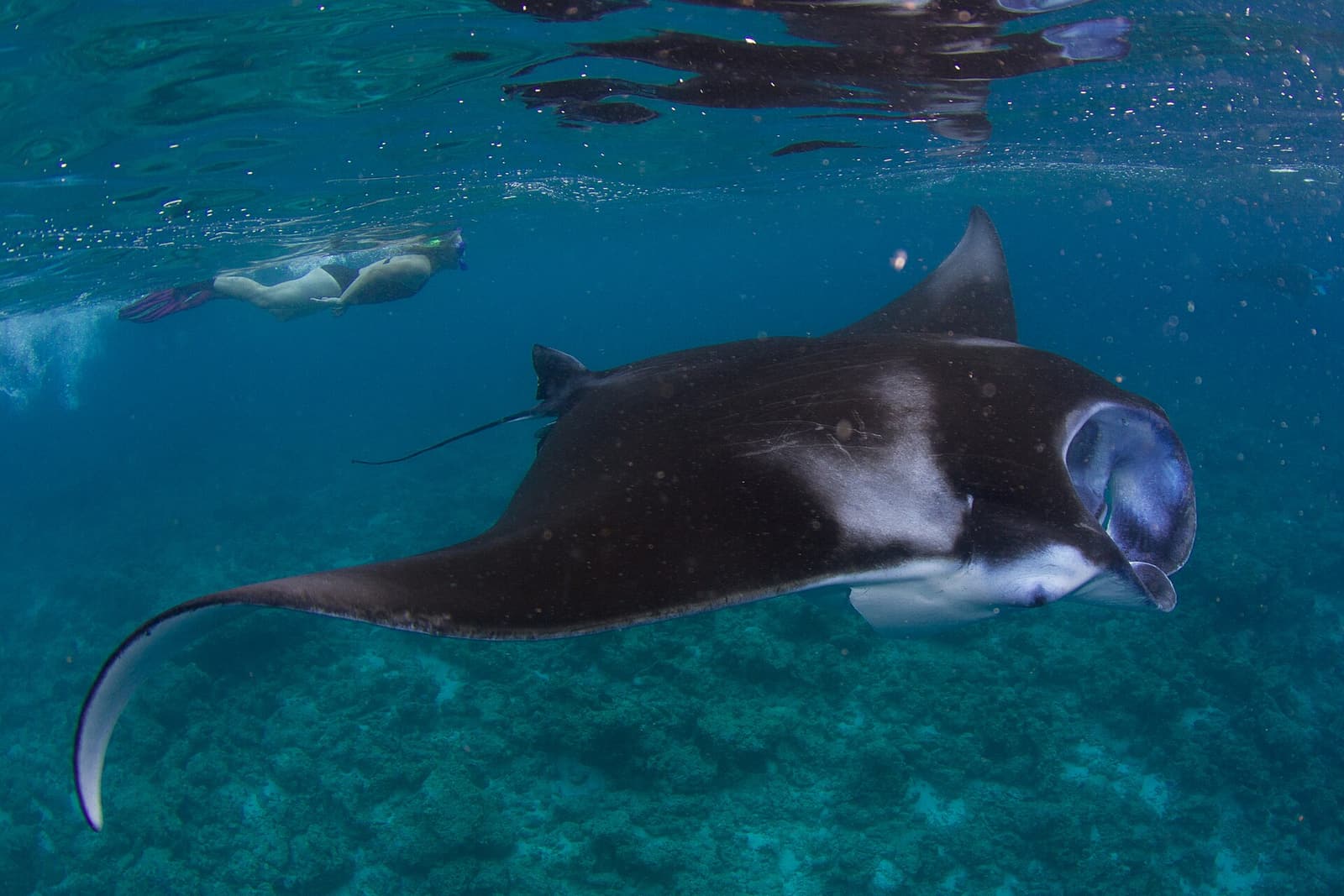
Reef manta rays visit cleaning stations around the southern Ari reefs, the best known being Rangali Madivaru near Rangali island. Snorkel and dive boats from Dhangethi visit manta areas when conditions suit; numbers vary greatly with the monsoon and the plankton.
Local-island rules in a nutshell
Cover shoulders and knees in the village; swimwear is fine on the bikini beach, boats and sandbanks. No alcohol anywhere on the island. Public displays of affection are frowned upon. Friday midday is prayer time and some things close. During Ramadan, avoid eating and drinking in public in daylight. The full picture is in our local-island guide.
Money
- Bring US dollars in cash (clean, recent notes) as your back-up: they are widely accepted for excursions and extras.
- There is an ATM on Dhangethi, but foreign cards are not always accepted and it can run out. Do not rely on it alone.
- Many guesthouses accept cards, sometimes with a surcharge. Ask in advance.
- Room prices often exclude the green tax, T-GST and service charge. Budget for them.
Food
Most guests eat at their guesthouse on half or full board: fish curries, grilled reef fish, rice, roshi flatbread, fresh fruit and plenty of tuna. For breakfast, try mas huni — tuna, coconut, onion and chilli eaten with roshi. Small cafés in the village serve hedhikaa snacks with sweet tea. There are no bars.
Internet and phone
Mobile coverage is good, with 4G from the Maldivian operators. A local tourist SIM or an eSIM bought at the airport is the easiest way to stay online; guesthouse Wi-Fi varies.
Health and safety
- The island has a health centre for minor problems; the atoll hospital is on Mahibadhoo, and serious cases go to Malé. Travel insurance that covers evacuation — and diving, if you dive — is essential.
- The sun is intense all year: use reef-safe sunscreen, a rash vest and a hat.
- Drink bottled or treated water; ask your guesthouse.
- Mosquitoes can be a nuisance at dusk; bring repellent.
- Never snorkel alone near the reef edge or channels, where currents can be strong.
What to pack
- Light, modest clothes for the village: T-shirts, shorts or skirts to the knee, a sarong.
- Swimwear, a rash vest, your own mask (for fit), reef shoes.
- Reef-safe sunscreen, hat, sunglasses, insect repellent.
- A dry bag for the speedboat, a power bank, a universal adaptor.
- US dollars in small notes for tips and extras.
How long to stay
Three nights is the realistic minimum — the transfer eats into your first and last days, and you want a spare day for the whale sharks. Five to seven nights lets you settle into island life. See our itineraries, when to visit and where to stay. With more time, you could pair Dhangethi with Fulidhoo in Vaavu Atoll, a small local island known for the nurse sharks and stingrays at its harbour. The two are in different atolls with no regular direct link, so connect through Malé; the shared speedboat from there to Fulidhoo takes about an hour. Our Fulidhoo travel guide explains what to do there and how to arrive.